In industrial and medical environments, improving efficiency isn’t just a competitive advantage, it’s essential. From energy savings to reduced downtime, businesses are looking for vacuum solutions that do more with less. For many, claw vacuum pumps offer the ideal solution.
Engineered for maximum performance with minimal maintenance, claw vacuum pumps from Becker provide significantly higher efficiency than other vacuum technologies. Their contactless, oil-free operation makes them especially well-suited for industries that require consistent, contaminant-free vacuum—like the medical field, where reliability and cleanliness are paramount.
In this article, we’ll explore how claw pumps drive efficiency through intelligent design, low energy usage, and simplified service requirements.
WHAT MAKES CLAW VACUUM PUMPS SO EFFICIENT?
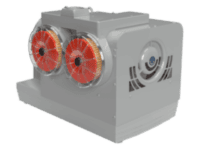
Claw vacuum pumps, also known as hook and claw vacuum pumps, are designed with two dry-running, non-contacting rotors that compress air inside a chamber without friction or internal wear. This contactless technology is a key differentiator from oil-lubricated rotary vane pumps, which rely on physical contact and lubricants to maintain vacuum pressure.
1. DRY-RUNNING, OIL-FREE OPERATION
Because claw pumps don’t use oil in the compression chamber, they eliminate the need for oil circulation systems, oil separators, or filtration. This provides multiple benefits:
- Lower power consumption, as there’s no viscous drag from oil
- No risk of contamination, as there’s no oil to compromise product or process integrity
- Reduced environmental impact with no oil disposal or leakage
2. CONTACTLESS COMPRESSION
With rotors that don’t touch each other or the chamber walls, claw pumps generate vacuum through precision geometry, not friction. This results in:
- Consistently high efficiency over time, with no mechanical wear degrading performance
- Smaller footprint thanks to integrated components, including built-in filtration and relief valves that eliminate the need for external add-ons
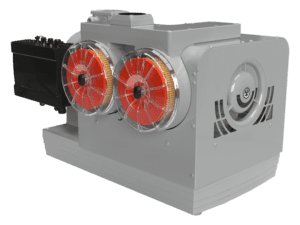
3. INTERNAL COMPRESSION FOR ENERGY SAVINGS
Claw pumps compress air internally before discharge, meaning they require less energy to reach desired vacuum levels. This improves volumetric efficiency and enables:
- Faster cycle times in automated processes
- Lower operating costs over extended duty cycles
- Better performance under varying load demands, common in medical suction systems
MAINTENANCE & UPTIME: A HIDDEN EFFICIENCY FACTOR
Efficiency doesn’t just come from how a vacuum pump runs—it also comes from how often it doesn’t need to be serviced.
Claw vacuum pumps require no regular vane replacement, no oil changes, and minimal wear-part servicing, making them a smart long-term investment for any operation. In critical applications like medical and laboratory settings, where downtime isn’t an option, this reliability directly improves throughput and reduces operating interruptions.
In contrast, traditional rotary vane pumps rely on sliding vanes that wear over time and require regular replacement, while liquid ring pumps require the monitoring and replacement of damaged or worn seals.
CONTACTLESS DESIGN = LONG-TERM PERFORMANCE STABILITY
Claw pumps’ non-contacting rotors allow them to operate with almost no internal friction, which brings long-term efficiency advantages:
- Stable vacuum output without the performance drop-off seen in wearing systems
- Fewer service disruptions, critical in 24/7 operations such as hospital vacuum systems or lab-based pneumatic applications
- Longer service intervals, reducing labor and downtime costs
In high-demand environments where consistency is king—like medical vacuum suction networks or electronics production—these advantages help claw pumps quietly outperform traditional alternatives.

IMPROVE EFFICIENCY WITH CLAW VACUUM PUMPS
When all factors are considered—energy consumption, maintenance needs, downtime, and reliability—claw vacuum pumps offer a clear path to long-term efficiency. Whether you’re supporting medical procedures, running pneumatic conveying systems, or automating production lines, claw pumps from Becker deliver unmatched performance with minimal fuss.
If you’re seeking a cleaner, more reliable, and more efficient vacuum solution, it may be time to upgrade to a claw pump. At Becker Pumps, our engineering team can help you evaluate your current vacuum pump or vacuum system and identify efficiency gains, whether you’re in the medical industry, manufacturing, or automation.
Contact Becker Pumps today to learn how our claw vacuum pumps can streamline your operation and reduce your total cost of ownership.