When evaluating vacuum pumps for your facility, cost is one of the first considerations that arises. Claw vacuum pumps are known for their efficiency, reliability, and minimal maintenance requirements, but what do they actually cost?
The answer is more than just the price tag. To make the best investment, it’s important to consider both the upfront purchase price and the long-term total cost of ownership (TCO), as well as the potential return on investment (ROI) over time.
UPFRONT COST OF A CLAW PUMP
Claw pumps typically have a higher initial purchase price compared to other types of vacuum pumps. The reason is simple: claw pumps are designed with advanced technology that delivers oil-free compression, longer service intervals, and higher efficiency.
While the upfront cost may be more, buyers should view a claw pump as a long-term investment, not just a one-time expense.
FACTORS THAT IMPACT PUMP COST
Several elements can affect the cost of a claw vacuum pump:
- Pump Size and Capacity – Larger pumps with higher flow rates will naturally cost more.
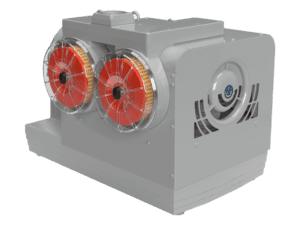
- Performance Features – Integrated variable frequency drives (like Becker’s VARIAIR technology) can add upfront cost while delivering significant long-term energy savings. Integrated inlet filtration is another value-add option, with filters mounted directly on the pump with clear covers that allow for quick visual inspections.
- System Integration – Whether the pump is being added to an existing system or installed in a new build will impact both equipment and installation expenses.
- Application Requirements – Demanding applications such as medical vacuum systems, 24/7 manufacturing lines, or environments involving debris, vapors, or liquids may call for specialized filtration or corrosion-protected pump variants. These application-specific considerations can impact the upfront system cost, but help ensure reliable, long-term performance.
THE ROLE OF TOTAL COST OF OWNERSHIP (TCO)
Looking only at the upfront price misses the bigger picture. TCO accounts for all expenses over the pump’s lifespan, including:
- Energy consumption
- Maintenance and service costs
- Replacement parts
- Downtime and lost productivity
Claw pumps shine in this area because they require minimal maintenance. Unlike rotary vane pumps, claw pumps don’t have vanes that wear down, and they don’t need constant oil changes or oil disposal. Service intervals stretch up to 20,000 operating hours, meaning less downtime, fewer parts, and lower labor costs.
This low-maintenance design helps reduce TCO significantly over the pump’s lifetime, as compared to other pump technologies.
RETURN ON INVESTMENT (ROI) WITH CLAW PUMPS
While claw pumps may cost more upfront, their energy efficiency and low maintenance requirements deliver a strong ROI. Facilities often see savings in three key areas:
- Energy Efficiency – Contactless compression and optional speed control reduce power usage.
- Maintenance Savings – Less staff time, fewer service calls, and fewer replacement parts.
- Uptime – More reliable performance means less downtime and more productivity.
When you factor in these benefits, the ROI on claw pump technology often outweighs the lower initial cost of traditional vacuum pumps.
IS A CLAW PUMP WORTH THE COST?
If your operation values long-term reliability, energy savings, and reduced maintenance, claw vacuum pumps are often the most cost-effective choice over their lifecycle. While you may pay more up front, the lower TCO and stronger ROI make claw pumps a smart investment for many facilities.
READY TO EVALUATE THE COST OF CLAW VACUUM PUMPS FOR YOUR FACILITY?
Becker offers a full line of claw vacuum pumps—including our BCV Series and VARIAIR BCV Series with integrated variable frequency drives—engineered to reduce lifecycle costs and improve system efficiency.
Contact us today to learn more about pricing, ROI, and the best claw pump for your application.