For facilities that rely on vacuum across multiple machines or production lines, managing several individual vacuum pumps can become a challenge. As production demands grow, so can energy consumption, maintenance requirements, and the complexity of keeping equipment running efficiently.
While point-of-use vacuum pumps work well for many applications, a centralized vacuum system may offer a more efficient way to support an entire facility.
The Challenges of Operating Multiple Vacuum Pumps
Many manufacturing facilities rely on individual vacuum pumps installed directly on or near production equipment. While this setup can meet immediate application needs, it may introduce operational challenges as the number of pumps increases.
Some common challenges include:
- Higher energy consumption: Individual pumps may continue operating at full capacity even when vacuum demand fluctuates throughout the day.
- Increased maintenance requirements: More pumps can mean more individual maintenance schedules, service points, and equipment to monitor.
- Heat and noise: Pumps located near production equipment can contribute to heat and noise in working areas.
- Challenges with expansion: As equipment is added or production requirements change, individual vacuum setups may require additional pumps or modifications.
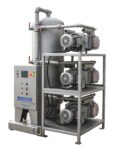
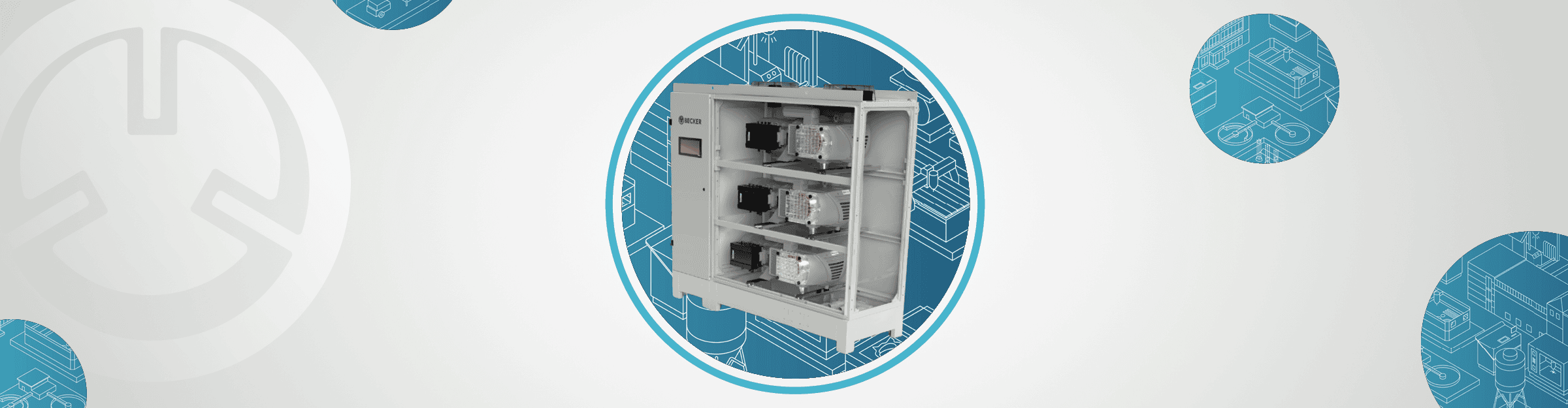
For facilities facing these challenges, Becker’s VARIAIR Central System (VACS) offers an alternative by coordinating multiple vacuum pumps through one centralized solution.
4 Reasons to Consider VACS for Your Facility
1. Use Energy Based on What Your Production Actually Needs
Does every machine in your facility need the same amount of vacuum throughout the day?
In many operations, the answer is no. Production schedules change, machines cycle on and off, and vacuum requirements fluctuate. However, individual point-of-use pumps may continue operating even when demand decreases.
Becker’s VARIAIR Central System (VACS) uses VARIAIR technology to adjust vacuum generation based on actual demand, rather than having every pump operate at full capacity.
The benefit: Opportunities to reduce unnecessary energy consumption and better manage operating costs.
2. Spend Less Time Managing Individual Pumps
When vacuum pumps are installed throughout your facility, monitoring their operation can become another responsibility for your maintenance team.
Instead of managing each pump separately, the VACS brings vacuum generation together under one coordinated system, making equipment easier to access and service.
The VARIAIR Controller features a touchscreen interface that allows your team to monitor and manage system operation from a central location.
The benefit: Easier maintenance and less complexity, making day-to-day system management easier.
3. Reduce Heat and Noise Where Your Team Works
If vacuum pumps are located directly alongside production equipment, the heat and noise they generate can affect the surrounding work environment.
A centralized vacuum system can allow pumps to be located away from primary production areas, depending on your facility’s layout and requirements. This can help reduce the heat and noise generated near operators and production equipment.
The benefit: A more comfortable working environment and greater flexibility in equipment placement.
4. Adapt to Changing Production Demands
Whether you’re adding a production line, upgrading equipment, or adjusting workloads, your vacuum requirements may change over time.
Rather than addressing each new requirement with a separate pump, a properly designed VACS installation can coordinate multiple pumps to accommodate varying demand and account for future capacity needs.
The benefit: Greater flexibility to support changing production requirements and plan for future growth.
Is Your Facility a Good Candidate for VACS?
Not every operation needs a centralized vacuum system. The right approach depends on your equipment, applications, production requirements, and facility layout.
However, if your operation relies on multiple vacuum pumps, planning on expanding production, looking to improve energy use, maintenance or noise, evaluating a centralized approach could reveal opportunities to improve efficiency and simplify operations.
Ask yourself:
- How many individual vacuum pumps are currently operating throughout our facility?
- Are our pumps running even when production demand is lower?
- How much time does our team spend maintaining individual pumps?
- Could relocating vacuum generation improve our production environment?
- Will our current vacuum setup support future production needs?
If you answered yes to several of these questions, a centralized vacuum system may be worth exploring.
Have Multiple Vacuum Pumps? Think Centralized.
You don’t necessarily need more individual pumps to meet your facility’s vacuum requirements. You may need a different approach.
Becker’s VARIAIR Central System (VACS) is designed to help manufacturers manage vacuum demand more efficiently through centralized generation and intelligent controls.
Whether you’re evaluating your existing equipment or planning for future growth, Becker’s team can help you determine whether a centralized vacuum solution makes sense for your operation.