Producing consistent, high-quality parts in plastics manufacturing begins before resin enters an injection molding machine or an extruder.
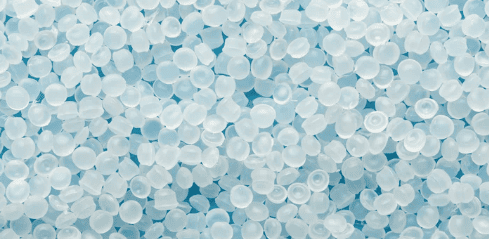
Moisture control is a critical part of material preparation because many engineering resins, including nylon, PET, polycarbonate, and ABS, are hygroscopic, meaning they absorb moisture from the surrounding air.
If that moisture is not removed before processing, it can affect both the appearance and performance of the finished part, making vacuum drying an integral part of the process.
THE RISKS OF MOISTURE IN PLASTIC RESINS
When moisture-containing resin is heated, the water can turn to vapor. In some materials, it can also cause hydrolysis, which breaks down the polymer’s molecular structure.
Improperly dried resin can contribute to:
- Surface splay or silver streaks
- Bubbles and internal voids
- Poor surface finish
- Brittleness or reduced strength
- Inconsistent dimensions
- Unstable processing conditions
These defects can increase scrap, delay production, and make it harder to maintain consistent part quality.
HOW DESICCANT DRYING WORKS
In most plastics applications, moisture is removed with a desiccant dryer. The process depends on four primary variables:
- Temperature: Heat helps moisture move from the pellet’s center to its surface. The correct temperature depends on the resin and must be carefully controlled to avoid material degradation.
- Dew point: Low-dew-point air has a greater ability to collect moisture from the material. If the desiccant is saturated or not regenerating correctly, drying performance can suffer.
- Airflow: Dry air must move evenly through the resin. Restricted or insufficient airflow can leave some areas of the hopper inadequately dried.
- Drying time: Moisture needs enough time to migrate out of the pellets. Required residence time varies by resin, pellet size, initial moisture level, temperature, and airflow.
A desiccant dryer circulates heated, dehumidified air through a hopper filled with plastic pellets. The dry air draws moisture from inside the resin, carries it out of the hopper, and returns to the dryer for continued treatment. Effective drying requires temperature, dew point, airflow, and drying time to work together.
THE ROLE OF REGENERATIVE BLOWERS
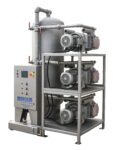
Regenerative blowers—both single-stage blowers and double-stage blowers— are commonly used in desiccant dryers to move process air through the heater, hopper, filters, desiccant beds, and connecting ductwork.
Depending on the dryer design, one blower may supply process air while another supports desiccant regeneration.
PROCESS AIRFLOW
The blower moves heated, dehumidified air through the resin. Stable airflow helps expose the pellets to consistent drying conditions and supports repeatable moisture removal.
DESICCANT REGENERATION
Desiccant eventually becomes saturated and must be regenerated. Heated air removes the collected moisture so the desiccant can return to service. A regenerative blower may provide the airflow needed for this cycle.
SYSTEM RESISTANCE
Filters, heaters, piping, desiccant beds, and resin all create resistance. The blower must deliver the required airflow at the system’s actual operating pressure, not only at open-flow conditions.
This is why proper blower sizing is essential.

WHY REGENERATIVE BLOWERS FIT PLASTICS DRYING
Regenerative blowers are well suited for desiccant drying because they can provide continuous, oil-free airflow at the moderate pressure levels these systems require.
Key advantages include:
- Continuous-duty operation
- Oil-free air delivery
- Non-contact compression
- Compact design
- Low routine maintenance
- Fixed-speed or variable-speed options
Single-stage blowers are often used when higher airflow is required at a moderate pressure differential. Double-stage blowers can provide greater pressure when the dryer has more resistance from filters, piping, or desiccant beds.
The correct choice depends on the complete system curve.
SELECTING THE RIGHT BLOWER
Selecting the right blower requires evaluating the complete drying system, not just maximum airflow or motor horsepower. Important factors include the required airflow, operating pressure, hopper size, material throughput, process-air and regeneration-air demands, air temperature, filtration, pipe length and diameter, duty cycle, electrical requirements, and whether fixed-speed or variable-speed operation is preferred.
The blower must provide the required airflow at the dryer’s actual operating point after resistance from filters, heaters, piping, desiccant beds, and resin is taken into account. A blower that appears properly sized at open flow may not deliver enough air once installed in the full system. Working with an experienced blower supplier helps ensure the selected unit matches the application and supports reliable drying performance.
BUILD A MORE RELIABLE DRYING PROCESS WITH BECKER
High-quality plastic parts begin with resin that has been properly prepared through vacuum drying. Desiccant dryers provide the heated, low-dew-point air needed to remove moisture, while regenerative blowers supply the airflow that keeps the process moving.
Becker Pumps brings decades of experience in vacuum and low-pressure air technology to plastics applications. Our regenerative blower portfolio includes single-stage, double-stage, fixed-speed, and variable-speed solutions designed for dependable industrial operation.
Whether you are designing a new dryer, replacing an existing blower, or troubleshooting inconsistent airflow, the right blower can improve drying reliability and support more consistent production.